The nature of our language is essentially bovine. Herd words and phrases reign supreme, sweeping before them all meaning and significance. But if our commitment to euphemistic language is disquieting, society's obsession with nonsensical and often deceptive modifiers is positively frightening. Consider the idea of alternative medicine. The presence of a modifier, by definition, means that the thing being described must be something different from medicine. Put another way, alternative medicine could be anything but medicine. If it were medicine, it wouldn't need the modifier.
A more egregious example is the notion of social justice. The term is often employed to induce guilt among the privileged and justify reparations from the wealthy. But the same logic applies: social justice cannot be justice because if it were, the modifier would be superfluous. In practice there can be no greater good than justice. It is the cornerstone of civilized society, the lofty summit of our collective achievement. The wild proliferation — and serious use — of terms like social justice implies a departure from the current path. And if justice is no longer our goal, what is?
Showing posts with label Ethics. Show all posts
Showing posts with label Ethics. Show all posts
August 26, 2011

August 23, 2011
Britain beats the blitz — again
Just as I have avoided letting this website become a dumping ground for music videos and other ephemera, so too have I refrained from mentioning Christopher Hitchens. No longer.
This from “Britons have been violent and cruel for generations,” Hitchens’ latest column for Slate, an online magazine of news, politics, and highbrow cultural commentary:
This from “Britons have been violent and cruel for generations,” Hitchens’ latest column for Slate, an online magazine of news, politics, and highbrow cultural commentary:
I realized that the collapse of British society into a Hobbesian nightmare of mutual predation and despair was still some distance off when I caught two little straws in the wind. The first was a well-framed photograph of a badly scorched bit of London, taken on the morning after a night of riots and vandalism. Apart from heavily accoutered cops, the only human figures on the scene consisted of a forest of sleeveless forearms, all brandishing the long handles of mops and heavy-duty scrubbing brushes. The ordinary working day had scarcely begun, but the process of digging out and cleaning up, inaugurated by the volunteer locals, was already under way. Of course, I thought to myself. Inflict a physical disaster on any British city, but especially on London, and the inhabitants seem to know, without any previous training for the role, that they have been cast in a remake of Britain Beats the Blitz.Good people everywhere should stand up as the mortal enemy of stupidity and foolishness. Great and noble nations need not be undone by thugs and hooligans. Hitchens is a controversial writer — his views are frequently dismissed as fringe-dwelling, his opinions derided as the utterances of a pathologically egotistical loudmouth — but he gets it right here: petty violence cloaked in shabby excuses is a stain on our society. It must be stopped.
August 22, 2011
Swine before pearls.
Gene Weingarten won the Pulizter Prize for Feature Writing in 2008 and 2010. Both stories were written for the Washington Post, where Weingarten works as a staff writer. The first story, “Pearls Before Breakfast,” concerns an experiment. The Post persuaded Joshua Bell, one of the best classical violinists in the world, to busk in the Washington Metro. The results were astonishing — and ran counter to the expectations of nearly everyone involved. Implicit throughout is the notion that we, citizens of the great western democracies, spend much of our time in the sweet embrace of oblivion. We simply don’t notice things that are happening around us. Bell’s performance, Weingarten writes, proved no exception:
It was all videotaped by a hidden camera. You can play the recording once or 15 times, and it never gets any easier to watch. Try speeding it up, and it becomes one of those herky-jerky World War I-era silent newsreels. The people scurry by in comical little hops and starts, cups of coffee in their hands, cellphones at their ears, ID tags slapping at their bellies, a grim danse macabre to indifference, inertia and the dingy, gray rush of modernity.
August 20, 2011
Conrad Black on looting, rioting
This from Conrad Black’s latest column in the National Post:
The recent British mobs and the so-called hockey rioters in Vancouver are just morally impoverished malcontents taking an opportunity to exploit the altruism and indulgence of decent societies. The same is true of the rioters in Paris and Athens — who are objecting to rather modest efforts by the governments in those places to take a minimal first step toward the avoidance of bankruptcy, a fate that would inflict a good deal more and deeper hardship than the claimed cause of the disturbances.Conrad Black may be a convicted felon, but that does not diminish his status as the most perspicuous social commentator working today. He is also a gifted writer. Although some people dismiss his prose as gratuitous, self-indulgent, and unnecessarily flamboyant, there can be no doubt that Black is a rare talent. He welds unimpeachable analysis with sparkling prose. His columns are always a pleasure to read, even if I disagree with his conclusions. (Not incidentally, I couldn’t agree more with his current offering.) His books, particularly his expansive biography of Franklin Delano Roosevelt, are incandescent. Those who look down on Black for his criminal record should seek a better pretext for ignoring the work of a master.
August 11, 2011
Three cups of deceit
Anyone who has read Into Thin Air, Jon Krakauer's account of the 1996 Everest disaster, will know that it is one of the most brutally honest, self-critical memoirs ever published. In collating information for the book Krakauer had every opportunity to modify the narrative, to deflect responsibility for his actions on 10 May 1996. That he chose not to is remarkable for, by his own admission, Krakauer was at least partly responsible for the death of Andy Harris, a guide on Rob Hall's Adventure Consultants team:
This possibility—which now seems so self-evident—didn't occur to either Mike or me at the time, however. In hindsight, Andy [Harris] was acting irrationally and had plainly slipped well beyond routine hypoxia, but I was so mentally impeded myself that it simply didn't register.
Into Thin Air is packed with similar admissions. Krakauer makes no attempt to hide behind the veil of oxygen deprivation, nor does he couch the disaster in abstract terms. That people suffered and died, he points out, was the direct result of human action. Many of Krakauer's companions offered similar admissions, perhaps the most heart-wrenching of which came from Neal Beidleman, a guide on Scott Fischer's Mountain Madness climbing team. That Beidleman knew any other course might well result in his own death does not diminish the pathos of his statement:
"But I can't help thinking about Yasuko [Namba]," he said when he resumed, his voice hushed. "She was so little. I can still feel her fingers sliding across my biceps, and then letting go. I never even turned to look back."Ultimately, Into Thin Air highlights the natural veracity of its author. Krakauer had everything to hide and chose to conceal nothing, a fact critical to the success of his newest venture.
* * *
Greg Mortenson's book Three Cups of Tea spent more than four years on the New York Times' bestseller list. It has inspired a generation to donate their savings to Mortenson's charity, the Central Asia Institute (CAI). President Obama, after receiving the Nobel Peace Prize, an honour for which Mortenson has been nominated three times, donated $100,000 to the CAI. It is a fantastically profitable organization. And according to Jon Krakauer, it is founded on fraud and deals in deceit. Krakauer's investigation, now in print under the title Three Cups of Deceit (Byliner, 2011), is summarized in this online brief. In it, Krakauer wrote:
On April 17, the CBS News program “60 Minutes” broadcast an exposé of Greg Mortenson, alleging that crucial parts of his bestselling book, Three Cups of Tea, were fabricated and that the charity he founded—the Central Asia Institute (CAI), which received $23 million in donations in 2010—has spent more money promoting Mortenson and his books than actually building and supporting schools in Pakistan and Afghanistan. Because I had once been one of Mortenson’s most enthusiastic supporters, and had given him more than $75,000 in the charity’s early years when it was teetering on the brink of insolvency, I was interviewed by correspondent Steve Kroft for the show. My comments—based on a comprehensive investigation of Mortenson I’d undertaken over the previous eleven months—supported the charges made by “60 Minutes.” I explained to Kroft that a former treasurer of the CAI board of directors had warned me, “Greg uses Central Asia Institute as his private ATM machine.”
Although these allegations have not yet been proven demonstrably true, Krakauer's reputation for honesty makes it unlikely that he would lend his name to a shabby smear campaign based on unsubstantiated charges. That Krakauer felt comfortable publishing a book on the subject – and facing the possibility of a lengthy and expensive libel suit – further buttresses the accuracy of his claims. At the very least, Krakauer's exposé should give everyone who read (and believed) Mortenson's book good reason to conduct their own investigations.
August 8, 2011
The folly of animal rights
This from Adam Gopnik's article "Dog Story" (The New Yorker, 8 August 2011):
The trouble with arguments for treating animals as equals is that the language of rights and responsibility implies, above all, reciprocity. We believe it to be wrong for whites to take blacks as slaves, and wrong for blacks to enslave whites. Yet animals themselves are far crueller to other animals in the wild than we are to them in civilization; though we may believe it to be unethical for us to torment a lion, few would say it is unethical for the lion to torment the gazelle. To use the language of oppression on behalf of creatures that in their natures must be free to oppress others is surely to be using the wrong moral language. A language of compassion is the right one: we should not be cruel to lions because they suffer pain. We don't prevent the lion from eating the gazelle because we recognize that he is, in the fine old-fashioned term, a dumb animal—not one capable of reasoning about effect, or really altering his behaviour on ethical grounds, and therefore not rightly covered by the language of rights.
Gopnik is writing about dogs, but his digression illustrates the absurdity of considering animals and humans on the same moral plane. Compassion ought to be a prerequisite for any interaction; rights, on the other hand, were conceived of and implemented by humans, and should be restricted to rational beings. To think otherwise is to diminish reason; jettison logic. Since rights are exclusively the product of reason and logic, casting a wide net effectively undermines their importance. Creatures great and small cannot be assessed against a scale of which they cannot conceive.
Bentham's utilitarianism makes no such distinction. Mammals are, I think everyone can agree, capable of feeling pleasure and pain. These impulses might be rudimentary, but they are certainly present. Similarly, no one can reasonably deny that Gopnik's lion experiences and inflicts pain; thinking otherwise would be preposterous. Few people would suggest that the lion inflicts pain because he wants to. The obvious answer is that he does what he has to – what he is hardwired to do. Humans, on the other hand, possessed of reason and burdened by consciousness, can choose to override whatever remnants of instinct remain. The only limit imposed on our moral expression is the need for reciprocity. The lion deserves our compassion, but he cannot be encompassed by our rights because he cannot return the favour.
Avoid mumbo-jumbo by not going to grad school.
According to the nameless purveyor of this terrific site, there are at least 100 reasons to avoid grad school. My favourite, number thirty-five, is so obviously true that it alone could suffice as a reason to skirt the abyss. The list, now comprising sixty-five good reasons, is worth reading even if you have no intention of pursuing a PhD. Academe may not be totally worthless, but it should not be entered into without a great deal of consideration.
December 18, 2010
Why Friedrich Nietzsche was not a Nazi
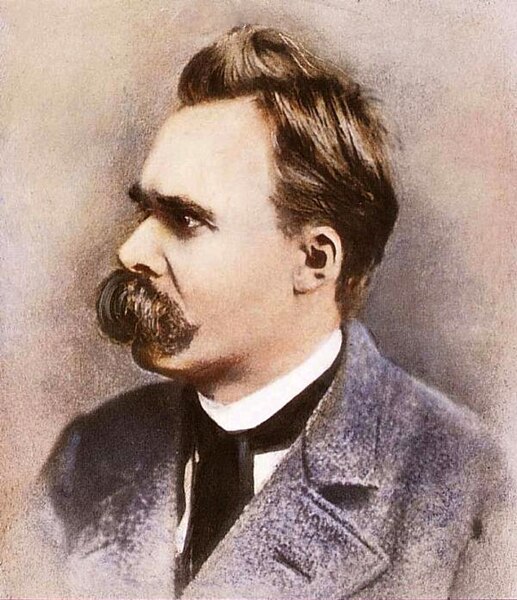 I don't much care for the writings and ideas of Friedrich Nietzsche: his thinking is too atomized and, ultimately, too vague for my tastes. So too does his style offend me. Whereas many Continental philosophers espouse ideas in highly-literate, silken prose, Nietzsche seems bent on polemic. Reading him amounts to an assault on the senses. This was, I'm sure, his intention, yet I can't help but think that constant emphasis and incessant ardour become tired and absorb meaning, leaving only the vitriol. In spite of all this I am prepared to defend him from those who exploit and manipulate the inherent ambiguity of his work to justify all manner of crimes and depredations. The most salient example, of course, is that of Nazism. Nietzsche was held up by the Third Reich as a champion of the cause; it was assumed that he was a proto-Nazi and that his writings, particularly his discussion of master- and slave-morality, could be invoked as a philosophical justification for the villainy perpetrated by Hitler's thugs. To be fair, a less than thorough reading of On the Genealogy of Morals is sure to leave a sour taste; his discussion of masters and slaves, barbarians and the mob, is eerily reminiscent of the rhetoric expounded by Goebbels and other propagandists of the Third Reich. This is not the case. The Nazis had it wrong.
Nietzsche's contempt for metaphysical slaves – a condition inherent to the Third Reich as we shall see – vindicates him from allegations of Nazism. Although his ultimate end seems to be the Übermensch (Overman), introduced in Thus Spoke Zarathustra, there can be no question that he valued autonomous self-expression over exogenous definition. Any use of his work to defend the crimes of the regime is both unfounded and spurious. Consider this passage from On the Genealogy of Morals (1887, trans. Walter Kaufmann, 1967):
The slave revolt in morality begins when ressentiment itself becomes creative and gives birth to values: the ressentiment of natures that are denied the true reaction, that of deeds, and compensate themselves with an imaginary revenge. While every noble morality develops from a triumphant affirmation of itself, slave morality from the outset says No to what is "outside," what is "different," what is "not itself"; and this No is its creative deed. This inversion of the value-positing eye–this need to direct one's view outward instead of back to oneself – is of the essence of ressentiment: in order to exist, slave morality always first needs a hostile external world; it needs, physiologically speaking, external stimuli in order to act at all–its action is fundamentally reaction.Underpinning the "philosophy" of Nazism is the simple fact that the whole of the Third Reich was predicated on a notion similar to Nietzsche's ressentiment. Nazism is "quite the contrary of what the noble man does, who conceives the basic concept 'good' in advance and spontaneously out of himself and only then creates for himself an idea of 'bad'!" The Nazis stand in diametrical opposition to Nietzsche's ideal view of the noble barbarian:
...the noble mode of valuation: it acts and grows spontaneously, it seeks its opposite so only as to affirm itself more gratefully and triumphantly – its negative concept "low," "common," "bad" is only a subsequently-invented pale, contrasting image in relation to its positive basic concept – filled with life and passion through and through.The Nazi edifice was constructed not on the self-assertion of the noble barbarian, but on the foundation of ressentiment. In speciously holding up the innocent as avowed enemies, the Third Reich revealed its allegiances. Rather than expressing good from within, the regime defined itself as good in reaction to artificially-created evil. The Nazis proclaimed their status as slaves – "the 'tame man,' the hopelessly mediocre and insipid man" – by defining themselves and their movement from without: "[w]hen the oppressed, downtrodden, outraged exhort one another with the vengeful cunning of impotence: 'let us be different from the evil, namely good!"
Nietzsche was not a Nazi, and any attempt to justify such a movement as the apotheosis of master-morality is risible; it is a perversion of an otherwise sound idea. They were (and, sadly, still are) no more the archetype of the "blond Germanic beast" than the lamb is the ideal bird of prey.
December 17, 2010
Kant on punishment; or, why we need to punish people more severely.
.jpg)
...it is easy to see how it happens that, although the conception of duty implies subjection to the law, we yet ascribe a certain dignity and sublimity to the person who fulfils all his duties. There is not, indeed, any sublimity in him, so far as he is subject to the moral law; but inasmuch as in regard to that very law he is likewise a legislator, and on that account alone subject to it, he has sublimity. We have also shown above that neither fear nor inclination, but simply respect for the law, is the spring which can give actions a moral worth. Our own will, so far as we suppose it to act only under the condition that its maxims are potentially universal laws, this ideal will which is possible to us is the proper object of respect; and the dignity of humanity consists just in this capacity of being universally legislative, though with the condition that it is itself subject to this same legislation.Whenever I stumble across a news item like this one, I inevitably reconsider Kant's views on punishment. The notion of the Categorical Imperative must be considered in light of the fact that every moral agent is ultimately responsible for his own actions. Given free choice each action necessarily establishes, in relation to itself, a maxim stating that the action in question ought to be universally permissible. In choosing to attack the cab driver, the machete-wielding teenager willed that his action instantiate a universal law, available to and permissible for everyone. (Whether or not he was aware of this is immaterial, I think.) Kant's conception of retributive justice pivots on the ineluctable fact that an individual cannot justifiably complain about having his actions, once duly installed in the realm of the universal, turned back on himself. If for instance X were to commit murder – and in so doing establish murder as universally permissible – he could not object to being himself murdered.
Taken one step further, Kant argues in The Philosophy of Law (1796, trans. W. Hastie, 1887) that injustice and immorality demand rather than merely deserve retribution:
But what is the mode and measure of punishment which public justice takes as its principle and standard? It is just the principle of equality, by which the pointer of the Scale of Justice is made to incline no more to the one side than the other. It may be rendered by saying that the undeserved evil which any one commits on another, is to be regarded as perpetrated on himself. Hence it may be said: "If you slander another, you slander yourself; if you steal from another, you steal from yourself; if you strike another, you strike yourself, if you kill another, you kill yourself." This is the right of retaliation (jus talionis); and properly understood, it is the only principle which in regulating a public court, as distinguished from mere private judgment, can definitely assign both the quality and the quantity of a just penalty.
This is why the wretched liberal philosophy of punishment currently in vogue – restitution, rehabilitation, and reintroduction – cannot properly force criminals to atone for acts of manifest evil in any acceptable way. Two years of comfortable incarceration does not swing the "pointer of the scale of justice" back into equilibrium.
Subscribe to:
Posts (Atom)